Heat Sink Material Selection Guide
Choosing the right substrate defines the thermal performance, weight, and cost of every cooling solution. HeatsinkMaker engineers heat sinks from aluminum, copper, and advanced composite alloys to match the thermal, mechanical, and commercial requirements of your application.
Core Materials We Machine Into Heat Sinks
HeatsinkMaker maintains a controlled inventory of wrought and cast alloys optimized for thermal management. Each grade is selected for its conductivity-to-cost ratio, extrudability, and compatibility with downstream surface treatments.
Aluminum Alloys
Lightweight, cost-effective, and ideal for high-volume extrusion. Standard grades include 6061, 6063, and 6060 for finned profiles and 7075 for structural cold plates.
- 6063-T5 / T6 — finned extrusions
- 6061-T6 — machined cold plates
- 7075-T6 — high-strength brackets
Copper & Cu Alloys
Maximum thermal performance for high-power electronics, IGBT modules, and laser diode assemblies. Higher density and cost make it ideal for localized heat spreading.
- C1100 — pure copper, 401 W/m·K
- C194 — stamped lead frames
- C360 — free-machining brass
Copper-Aluminum Combinations
Embedded copper heat pipes or base plates inside aluminum fin stacks deliver copper-class spreading with aluminum-class weight and cost.
- Heat-pipe assisted fin stacks
- Vapor chamber cold plates
- Brazed Cu-Al assemblies
Stainless Steel
Used selectively for structural housings, fasteners, and corrosive-environment applications. Typically paired with copper or aluminum thermal interfaces.
- 304 / 316L — housings & brackets
- Skived fin heat exchangers
- Medical & food-grade compliance
Graphite & Composite
Pyrolytic graphite and carbon-fiber composites provide ultra-thin spreading layers for smartphones, LED modules, and aerospace electronics.
- Pyrolytic graphite sheets
- Carbon-fiber reinforced plates
- AlSiC metal matrix composites
Zinc & Magnesium Alloys
Die-cast grades for complex geometries in consumer electronics, LED fixtures, and high-volume OEM enclosures where net-shape production reduces machining cost.
- Zamak 3 / 5 — die-cast housings
- AZ91D — magnesium lightweight parts
- Net-shape + CNC finishing
Material Property Comparison
Reference values used by HeatsinkMaker engineers during thermal simulation and feasibility analysis. Specific grades, tempers, and tolerances are confirmed per RFQ.
| Material | Grade | Thermal Cond. | Density | Tensile | Typical Use |
|---|---|---|---|---|---|
| Aluminum | 6063-T5 | 209 W/m·K | 2.70 g/cm³ | 186 MPa | Finned extrusions |
| Aluminum | 6061-T6 | 167 W/m·K | 2.70 g/cm³ | 310 MPa | Machined cold plates |
| Aluminum | 7075-T6 | 130 W/m·K | 2.81 g/cm³ | 572 MPa | Structural brackets |
| Copper | C1100 | 401 W/m·K | 8.96 g/cm³ | 220 MPa | High-power spreading |
| Copper | C194 | 260 W/m·K | 8.80 g/cm³ | 400 MPa | Stamped lead frames |
| Stainless | 304 | 16 W/m·K | 8.00 g/cm³ | 515 MPa | Housings / hardware |
| Graphite | Pyrolytic | 1500 W/m·K (in-plane) | 2.20 g/cm³ | — | Ultra-thin spreading |
Values are typical at 20 °C and may vary by temper, lot, and supplier certification. Engineering data sheets are issued with each quotation.
How to choose the right material
The "best" heat sink material is a function of heat flux, weight budget, manufacturing volume, and total cost. Our engineers walk every project through the same five-step filter.
For most forced-air electronics cooling between 0.5 – 5 W/cm², extruded aluminum 6063 is the cost-performance default. Above 10 W/cm², copper or copper-aluminum hybrids deliver measurable ΔT reductions.
-
01
Define the thermal load
Heat dissipation (W), target ΔT, available airflow, and mounting footprint. We start from your system-level requirements, not a catalog SKU.
-
02
Constrain the design envelope
Max dimensions, weight targets, IP rating, vibration profile, and EMI shielding. Materials such as magnesium or composite may unlock new form factors.
-
03
Match process to geometry
High fin density suggests extrusion. Complex internal passages suggest bonded cold plates. Net-shape housings may justify die casting at scale.
-
04
Apply surface treatment
Anodizing, chromate conversion, ENIG, or powder coat. Surface selection depends on emissivity targets, cosmetic requirements, and corrosion exposure.
-
05
Validate with samples
Prototype units are thermally tested in-house before tool release. DFM and cost engineering run in parallel so the chosen material is also the chosen part.
Compatible surface treatments
Material selection and surface treatment are inseparable. HeatsinkMaker controls both in-house, ensuring compatibility, lot consistency, and documented process routes.
Anodizing
AluminumType II / Type III hard anodize. Increases emissivity to 0.85+, adds abrasion resistance. Black, clear, and custom colors available.
Chromate
Al / ZnTrivalent chromate (Alodine) for corrosion protection on aluminum and zinc. RoHS-compliant formulations standard.
Tin / ENIG
CopperSolderable finishes for copper cold plates and lead-frame assemblies. ENIG for lead-free soldering compatibility.
Powder Coat
All metalsAesthetic and protective finishing. Excellent dielectric strength for high-voltage busbar and power module enclosures.
Industry-specific material recommendations
Power Electronics & IGBT
Copper base plates or copper-in-aluminum cold plates with vacuum-brazed or friction-stir interfaces. High thermal mass, low ΔT.
LED Lighting
Anodized aluminum extrusions with optimized fin profiles. Lightweight, decorative, and easily machined for OEM mounting patterns.
Datacom & Telecom
Vapor chamber and heat-pipe assisted fin stacks for 1U/2U servers, switch fabrics, and AI accelerator modules.
EV & Mobility
Liquid cooling plates and motor housing heat sinks requiring structural integrity, corrosion resistance, and tight tolerance.
Industrial Drives
Heavy-duty extruded or bonded-fin profiles for VFDs, servo drives, and rectifier cabinets operating in dusty, high-temp environments.
Consumer & Wearables
Ultra-thin graphite spreaders, magnesium die-cast enclosures, and skived copper pins for compact mobile and wearable devices.
Material control from billet to finished part
Most heat sink buyers discover material risk after tooling is cut. HeatsinkMaker verifies chemical composition, mechanical properties, and traceability before the first chip is removed — eliminating surprises and supporting long-term OEM programs.
- ✓ Mill test certificates (MTC) issued with every production lot
- ✓ Spectrometer verification on receipt and on finished part
- ✓ RoHS, REACH, and conflict-mineral documentation on file
- ✓ Approved-vendor list maintained for every alloy in production
Tell us your material and thermal requirements
Upload your drawing, STEP file, or thermal specification. Our materials engineering team will return a feasibility review, recommended alloy, and indicative cost within two business days.
- DFM feedback included
- Material recommendation
- Unit cost at MOQ 1k / 10k
- Lead time estimate
Replies within 24 hours on business days.
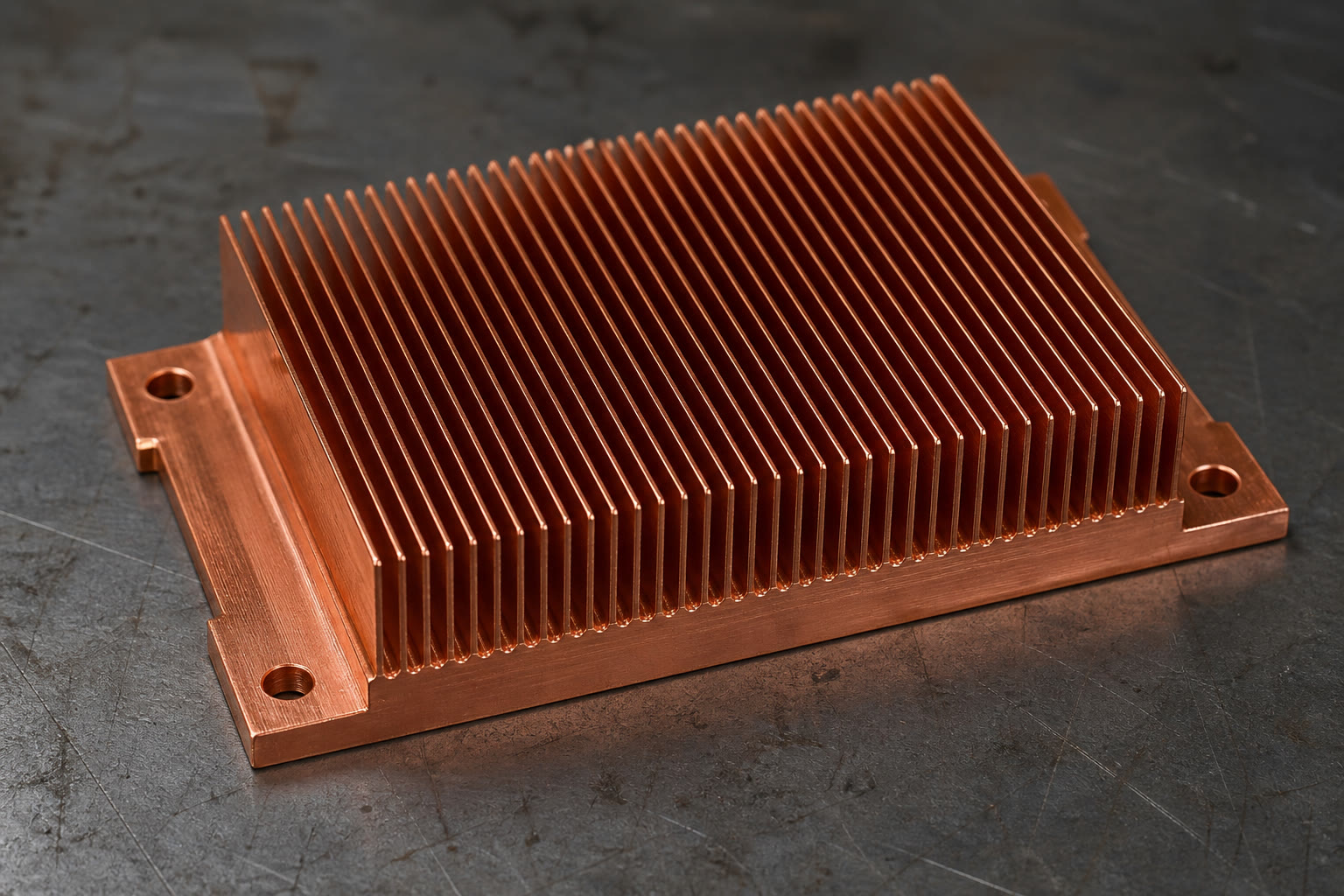
Custom Copper Heat Sink Manufacturer | HeatsinkMaker
Custom copper heat sinks by HeatsinkMaker: C1100 skived, cold forged, and CNC copper assemblies with heat pipes. From prototype to mass production.
View details →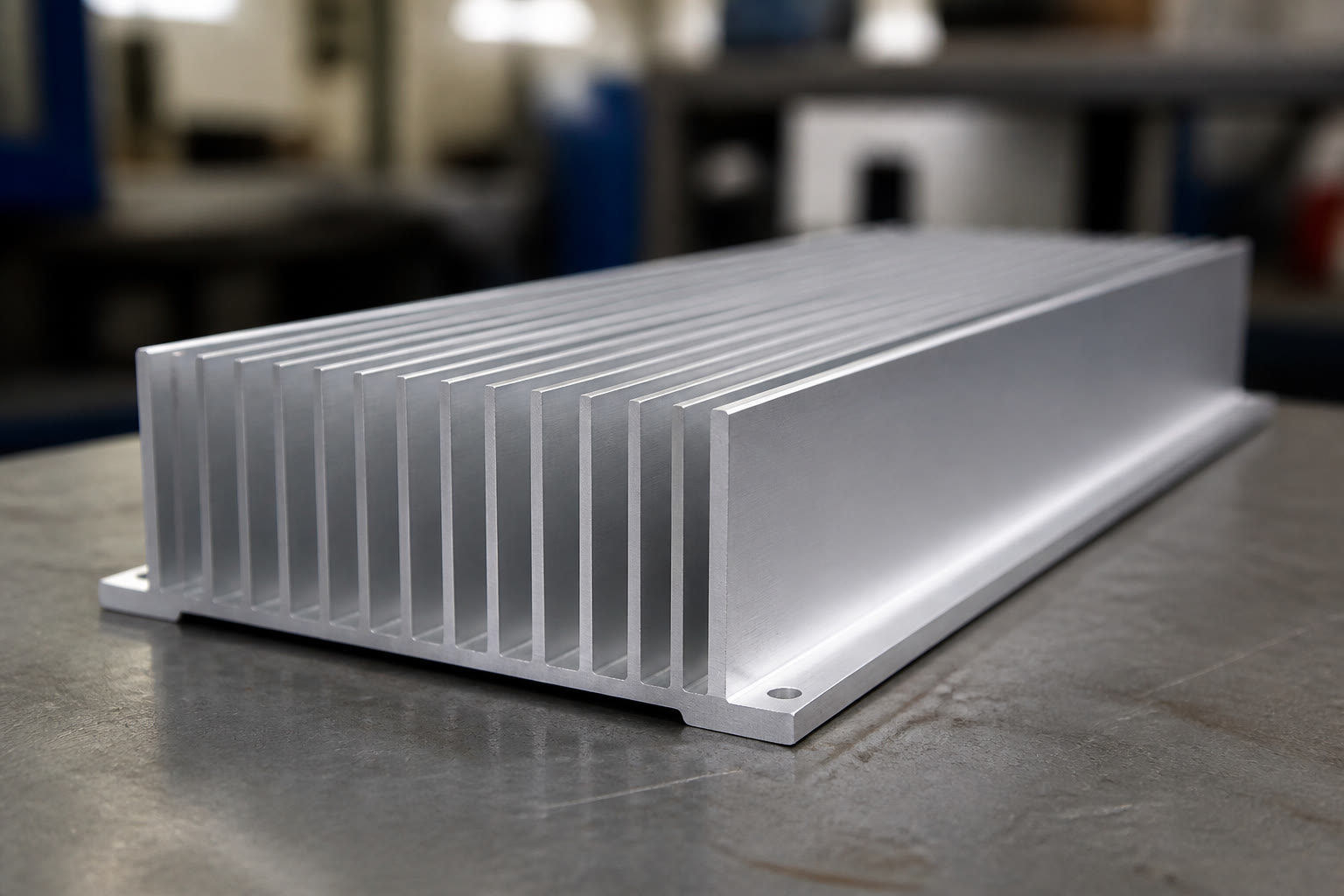
Custom Aluminum Heat Sink Manufacturing | HeatsinkMaker
Custom aluminum heat sink manufacturer since 2014. We provide thermal design, prototyping, and mass production of extruded, skived, and CNC machined cooling solutions.
View details →